Showing posts with label Difficulties in Bible Translation. Show all posts

Monday, March 23, 2015

The Big Exchange

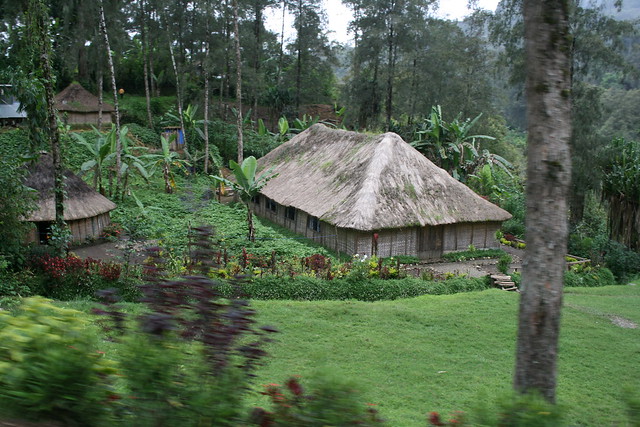
A valley in Papua New Guinea


For even the Son of Man came not to be served, but to serve, and to give His life as a ransom for many. -Mark 10:45

Bible translator Neil Anderson and six Folopa men were working hard translating the Gospel of Mark in the Folopa language. But when they came to Mark 10:45,where it says that the Son of Man came to "give His life as a ransom," they hit a roadblock. How could they translate 'ransom'?

Neil explained to the men that a ransom is a price that must be paid before a captive, whose life hung in the balance, can go free. As he explained, Neil could see they understood.

"We need to ransom people all the time," one of the Folopa men said. "When a man is felling a tree and it falls the wrong way and kills someone, the clansmen of the dead person demand payment. If the relatives of the offender's clansmen don't pay, the relatives of the dead person demand the life of the offender. To save his life, we make an exchange. Pigs, shell money, and other things of value are given to the relatives in exchange for the life of the offender."

Bursting with excitement, Neil used their phrase to help him translate Mark 10:45 into Folopa. When he was done, he read it aloud. Translated back into English, the finished verse read, Jesus came to affect an exchange whereby He took the punishment of the evil deeds of many people. He came so that many people could go free and He died. 

When they heard these words, the men were deeply moved.

"We give a lot to make an exchange for a wrong," one man said. "But we have never given a person for the exchange price. Jesus did a great work for us."

Isn't it staggering to know that Christ gave His life in exchange for yours?

*This post was taken from the Wycliffe Bible Translators USA blog. 


Tuesday, March 10, 2015

Much Work to Do

Multitasking


There always seems to be something extra to do. Multitasking hasn't seemed to diminish anyone's work load. Living in remote areas of Papua New Guinea takes time and energy. Many translation teams are delayed in completing their linguistic efforts simply by the normal requirements of life. Many translators need to continue doing what they always do and try to squeeze translation work in when they can. Pray that communities can churches would rally around the teams and assist them with the basic life requirements so they can focus on the language work.


*This post was taken from the PNG Experience blog. 

Sunday, November 16, 2014

Letting the Fire Burn

Mack and Doris Graham were dispirited. In 1983, their family had settled among the Kandawo people in Papua New Guinea and began to learn their language. Optimistic about the future for this new translation project, the Grahams were blissfully unaware of the trials and difficulties they were about the encounter.

Soon they experienced fierce opposition. While away from the village for a season, thieves broke in and vandalized their home.
Discouraged but determined to continue their work for God's glory, the Grahams decided to build again. But this time, the entire home was dismantled and stolen, piece by piece.

What should they do? The Grahams knew that hardships often happened to those who were working to bring God's Word to people, but to have their home destroyed twice? Maybe God was trying to say something to them.

They stopped to pray and ask God a simple question: should they try again, or was God closing the door? Could this be God's way of leading them in a new direction?

As they prayed, a colleague had a vision of small fires burning across the landscape. Maybe God was saying there was going to be a revival among the people, and that fires were going to be lit in the hearts of those hungry for Him.

Mack and Doris decided to ask God to confirm that He wanted them to return by providing other confirmation before a certain date .If the people asked them to return by that date, they would. But if not, it was over. They would leave their village home in Kandawo and go wherever God led.

The day finally arrived. Afternoon passed, and then evening, but still no word. Mack and Doris began to think that God was showing them that He was shutting the door, and maybe they weren't supposed to return to their village home.

Then, six hours before midnight, a letter was red over a two-way radio: "Would you please come back?" it read.

Mack and Doris knew that God had answered their prayers and confirmed their call to the village. So they returned and built yet another house. Later they watched in shock as the third house burned to the ground.

But instead of losing hope, the Graham family built a fourth house. Believing that God had clearly spoken to them about continuing their work among the Kandawo people, they continued to trust the Lord by placing this new house in his hands.

They gave many more years translating and ministering to the Kandawo people. And more than two decades ago, Mark's Gospel-the first book to be translated-reached the final stages of the translation process and was checked by a consultant. At the beginning of 2013, the same consultant checked the final book of the New Testament-Revelation.

In 2014, just over twenty years after they first moved to the Kandawo village, Mack and Doris hope to typeset the entire New Testament and finally see the Bible in the hands of the Kandawo people.

*This story was taken from the 2014 The Finish Line brochure, which teaches people how to pray for Bible Translation projects that are about to be finished.