To keep my mind from spinning completely off into space, I have created a separate blog for my Wycliffe ministry. Please visit http://adventuresinbibletranslation.blogspot.com (I know, it's a mouthful; I might fix that later...) to continue reading stories and posts about Wycliffe, Papua New Guinea, and Bible translation.
This blog will continue to remain a place for my reviews on books, ramblings on writing, and outbursts of poetry. Thank you so much for continuing to visit this blog, and yes, the beautiful cliffs of Ireland. And have a happy Easter! What are you doing to celebrate the celebration of Christ this weekend?
Showing posts with label Bible Translation. Show all posts
Showing posts with label Bible Translation. Show all posts
Thursday, April 2, 2015

Tuesday, March 31, 2015
Sign Language Impact
 |
| Signing for Impact |
Tens of thousands of deaf people are locked in a world of silence in PNG, having never been taught sign language and unable to communicate with others.
Foreting and Nathalie Juhonewe, who are both deaf themselves, have a burden for ministering to the deaf of PNG. They know that establishing an accurate dictionary is the first step. In fact, Nathalie calls it a fundamental leap. She asks, "How can anyone translate the Bible into PNG's sign language if there's no dictionary to rely on and just a few established signs for Christian concepts? And most of all, how can anyone reach the deaf if they haven't acquired any language since their parents never learned to sign with them as children?
There is an old dictionary from 1994 which a team of hearing people copied from Australian Sign Language with some created signs for PNG words, totaling about 2250 words/signs. However, it needs revision to be useful for the deaf community in PNG. The sign language used in this country has developed into an independent sign language with its own native grammar and syntax.
Now that the deaf children who have used the dictionary since 1994 are adults, they are reviewing the dictionary and updating it to include signs used in their language and deleting signs that they don't use. A team of deaf people from every corner of Papua New Guinea has gathered twice yearly since 2012 and developed almost 1300 new signs thus far. The goal is a sign language dictionary that will be an up-to-date foundation for everyone who needs or wants to know the national sign language used here in PNG.
There are an estimated 24,000-30,000 pre-lingual deaf people in PNG who were not taught sign language as children. Once every deaf child starts to learn it, the national sign language would become one of the largest indigenous languages of Papua New Guinea. That's not happening yet, but Foreting, Nathalie, and others are working toward that goal.
Nathalie explained, "We minister to the deaf in the hopes of seeing every deaf child start to sign, so that they have a language to connect with other people and to learn about our amazing and loving God."
 |
| Changing lives |
Thursday, March 26, 2015
Write it on the Board
 |
| Write it down |
Remember when you had to go to the front of the class and write on the board? Here is a class in Back Translation Principles that is held in Ukarumpa, Papua New Guinea. As part of the translation process, translators take translated material and write it out in English to check it for accuracy. First it is translated word for word. Then it is rearranged to make sense in English because word order and sentence structure can be different from language to language. It's hard work and requires a good understanding of both languages. Pray for wisdom, as this training is very important to the accuracy of the translation.
*This post was taken from the PNG Experience blog.
Monday, March 23, 2015
The Big Exchange
 |
| A valley in Papua New Guinea |
For even the Son of Man came not to be served, but to serve, and to give His life as a ransom for many. -Mark 10:45
Bible translator Neil Anderson and six Folopa men were working hard translating the Gospel of Mark in the Folopa language. But when they came to Mark 10:45,where it says that the Son of Man came to "give His life as a ransom," they hit a roadblock. How could they translate 'ransom'?
Neil explained to the men that a ransom is a price that must be paid before a captive, whose life hung in the balance, can go free. As he explained, Neil could see they understood.
"We need to ransom people all the time," one of the Folopa men said. "When a man is felling a tree and it falls the wrong way and kills someone, the clansmen of the dead person demand payment. If the relatives of the offender's clansmen don't pay, the relatives of the dead person demand the life of the offender. To save his life, we make an exchange. Pigs, shell money, and other things of value are given to the relatives in exchange for the life of the offender."
Bursting with excitement, Neil used their phrase to help him translate Mark 10:45 into Folopa. When he was done, he read it aloud. Translated back into English, the finished verse read, Jesus came to affect an exchange whereby He took the punishment of the evil deeds of many people. He came so that many people could go free and He died.
When they heard these words, the men were deeply moved.
"We give a lot to make an exchange for a wrong," one man said. "But we have never given a person for the exchange price. Jesus did a great work for us."
Isn't it staggering to know that Christ gave His life in exchange for yours?
*This post was taken from the Wycliffe Bible Translators USA blog.
Thursday, March 19, 2015
Just Use the Same Language!
 |
| Choose One |
When confronted with the task of starting almost 300 language projects in Papua New Guinea, it might cause you to think, "Why not just teach everyone the same language?" Language and culture tie together. The unique beauty of each culture is expressed best by the indigenous language. Perhaps the best way to think about it is to marvel at the creative beauty in nature. How would you choose just one butterfly? Translating languages are essential to preserving the beauty of the cultures they reside in. Scriptures that are translated in the heart language of the people become clear and understanding is enhanced when seen through their cultural lens. Pray that the untranslated Scriptures of Papua New Guinea would have a project started even this year!
I have some thoughts to add to the post from the PNG Experience blog. As I speak to people about the need for Bible translation, I receive this question a lot: "Why don't you teach the people English?" Well, there's several negative things this statement implies, such as that English is superior than the people's language that needs to be translated, and that God only speaks English.
The gospel itself is an act of translation! Christ translated himself into humanity: he took on our looks, our limitations, and our words. The essence of the gospel is that we can't act or be anything special to earn it-it's a free gift. So, people shouldn't have to be anything different or do anything different to receive the Scriptures in their own language. It's a free gift.
When we translate the Scriptures into a person's heart language, we are telling them, "You matter. God loves you just as you are. In fact, He speaks your language!"
Monday, March 16, 2015
Music to My Ears
 |
| Music to-go |
*This post was taken from the PNG Experience blog.
Tuesday, March 10, 2015
Much Work to Do
 |
| Multitasking |
*This post was taken from the PNG Experience blog.
Tuesday, March 3, 2015
Bright Moon Rising
 |
| By the light of the moon |
In areas where we have so may things that compete with the Bible, it can seem to lose its luster. Is it the Bible or are we distracted by competing things? In Papua New Guinea, when a New Testament is completed, celebrations are huge and people get excited. Pray for the Kandawo people who will be celebrating their New Testament dedication in April. Pray for lasting results as the Scriptures change lives and impact communities.
*This post was taken from the PNG Experience blog.
Tuesday, February 24, 2015
Water to Drink
Whew! Back into the land of the cold and the dead. My mother and I just returned from a trip to Friendswood, Texas to speak to my grandparents' friends and church about my Wycliffe ministry. The Lord was good; many people seemed interested in the work of Bible translation and He added several new partners to my Wycliffe team! Please pray that more of those I spoke to will desire to be a part of the exciting transformative work the Lord is doing for His kingdom around the world.
It was also a good to spend time with my grandparents and sister, not to mention that the weather was beautiful. We spent Sunday afternoon drinking in the sun, listening to the birds chirp and watching the lovely blossoms while it was freezing up here in north Texas. Soon we will be enjoying all of the above-mentioned things up here...I hope :).
Now on to another one of those fascinating comparisons about Bible translation and Papua New Guinea from the PNG Experience blog that I highly enjoy and hope you do as well.
Physical life demands water in order to survive. In Papua New Guinea, water is abundant in most places and life displays its green color everywhere. Just like the physical life craves water, so the spiritual life craves Scripture. However, in PNG, there are plenty of places where the Scriptures are not translated into the language of the area. There, the spiritual life can become quite dry...like drinking from a rock. Pray that the almost 300 languages that need a translation project started would find resources to begin.
It was also a good to spend time with my grandparents and sister, not to mention that the weather was beautiful. We spent Sunday afternoon drinking in the sun, listening to the birds chirp and watching the lovely blossoms while it was freezing up here in north Texas. Soon we will be enjoying all of the above-mentioned things up here...I hope :).
Now on to another one of those fascinating comparisons about Bible translation and Papua New Guinea from the PNG Experience blog that I highly enjoy and hope you do as well.
 |
| Abundant Water |
Physical life demands water in order to survive. In Papua New Guinea, water is abundant in most places and life displays its green color everywhere. Just like the physical life craves water, so the spiritual life craves Scripture. However, in PNG, there are plenty of places where the Scriptures are not translated into the language of the area. There, the spiritual life can become quite dry...like drinking from a rock. Pray that the almost 300 languages that need a translation project started would find resources to begin.
 |
| No water here! |
Wednesday, February 11, 2015
Learning the Value of Internships
*This post from the Wycliffe blog is about my sweet friend, Leah Doty, whom I met at training in November in Orlando, Florida. She will be serving the Lord in SE Asia as soon as she reaches 100% with her financial partnership.
Bible translation is in Leah's blood. It began with her grandparents, long-time translators in Southeast Asia. And it continued with her parents, faithful administrators and translators in Kenya, Thailand, the Philippines and the Solomon Islands.
Then it came time for Leah to decide what to do. She studied at Houghton College, knowing that she wanted to work in Bible translation, but she was unsure of how or where.
Leah turned to internships with Wycliffe and SIL (one of Wycliffe's primary partners) to help her figure it out. Her first internship took her to Dallas, where she served the Language and Culture Archives department, helping former linguists archive their untapped resources.
"It was good to get perspective on what happens there," Leah recalls. "The resources we're producing need to be made accessible, (but I learned that) archives is not my life's calling."
Next Leah signed up for a internship that took her to Northeast Thailand, where she worked in Scripture engagement, facilitated workshops by assisting local Rit people in developing curriculum.
"(There) I got to contribute to the literacy of the Rit people, lending skills that were in demand," leah recounted. "It was great."
But as the internship came to an end, Leah wasn't ready to finish her linguistics work. She was finally sure of what she wanted to do in Bible translation-linguistics in Southeast Asia, where her family has worked for generations.
"I'm excited to take and interest in peoples' language in order to communicate love and value to them-primarily, to see communities transformed by the work we do," she said.
Now, Leah is headed back to a country where she grew up, and the internship process was critical to finding her own place in missions.
"(The internships) kind-of exemplified two different sides of what Wycliffe and SIL do," Leah said. "There's a diversity of work that we do and it was good to see a couple different perspectives (of that."
Now, more than ever, Leah feels connected to a purpose bigger than herself- and, besides her family, she has her internships to thank for that.
"I want to see the message of the gospel transform society, change the world."
 |
| Leah's family |
Then it came time for Leah to decide what to do. She studied at Houghton College, knowing that she wanted to work in Bible translation, but she was unsure of how or where.
Leah turned to internships with Wycliffe and SIL (one of Wycliffe's primary partners) to help her figure it out. Her first internship took her to Dallas, where she served the Language and Culture Archives department, helping former linguists archive their untapped resources.
"It was good to get perspective on what happens there," Leah recalls. "The resources we're producing need to be made accessible, (but I learned that) archives is not my life's calling."
Next Leah signed up for a internship that took her to Northeast Thailand, where she worked in Scripture engagement, facilitated workshops by assisting local Rit people in developing curriculum.
"(There) I got to contribute to the literacy of the Rit people, lending skills that were in demand," leah recounted. "It was great."
 |
| Leah's extended family |
But as the internship came to an end, Leah wasn't ready to finish her linguistics work. She was finally sure of what she wanted to do in Bible translation-linguistics in Southeast Asia, where her family has worked for generations.
"I'm excited to take and interest in peoples' language in order to communicate love and value to them-primarily, to see communities transformed by the work we do," she said.
Now, Leah is headed back to a country where she grew up, and the internship process was critical to finding her own place in missions.
"(The internships) kind-of exemplified two different sides of what Wycliffe and SIL do," Leah said. "There's a diversity of work that we do and it was good to see a couple different perspectives (of that."
Now, more than ever, Leah feels connected to a purpose bigger than herself- and, besides her family, she has her internships to thank for that.
 |
| Leah Doty |
Saturday, February 7, 2015
Yum! Bananas for Breakfast
 |
| Breakfast of Champions |
*The above post was taken from the PNG Experience blog.
Tuesday, February 3, 2015
Looking Beneath the Surface
 |
| Coral Reef |
*This post was taken from the PNG Experience blog.
Saturday, January 31, 2015
Still Waiting
 |
| A boy who needs God's Word |
*This post was taken from the PNG Experience blog.
Thursday, January 22, 2015
Early Start
 |
| Morning in Papua New Guinea
Just before the sun crests the hills near Ukarumpa Center, Papua New Guinea, the sky will often produce a dazzling array of colors. In the far corners of the sky, the blues and greys are just beginning to get a hint of red while close to the source, the sky is ablaze with oranges and yellows. It is as if they can't wait to be announced, but work has already begun in many places.
Pilots and mechanics ready planes, teachers are putting the final touches on their lessons, the training center is serving breakfast and linguists and translators are working in the silence of their offices. Pray for the early morning work being started. Pray that the work will be done with full attention and great skill.
*This post was taken from the PNG Experience blog. |
Friday, January 16, 2015
Words for the Heart

What speaks clearly to the heart? Certainly not a foreign language. Yet many language groups in Papua New Guinea only have access to the Scriptures through Bible that is written in a language different than the one the learned at birth. But...that can be changed! Prayer is the greatest tool that we have to change things. Pray today that more resources and works would be found so that the Word of God would come to all language groups that are waiting for them.
*This blog post was taken from the PNG Experience blog.
*In regard to my Wycliffe ministry, I am now at 48% for my one-time gifts and 15% for my monthly gifts, and that much closer to the Bibleless people in Papua New Guinea! Praise the Lord for His faithfulness and provision!
Saturday, January 10, 2015
What's New

January is often a time for new beginnings. We sometimes make New Year resolutions that focus on things that we want to do this year that we didn't do last year... or the budget year may have ended and a new budget year started. Perhaps new programs and projects will be initiated on this date. However, in reality, January 1 is just another day... with a day before that is now history and a day to come that brings bright hopes and prospects. In the world of language development and Bible translation, it may mean that another year of work has been completed or sadly, another year where a language group still hasn't tasted even the smallest amount of Scripture in their heart language. Why not pray today that the year 2015 would be the year that a record number of languages in Papua New Guinea would have a project started in their language.
 |
| New Words for a New Year
*This blog was taken from the PNG Experience blog.
|
Saturday, January 3, 2015
A Look Back, a Step Forward
I hope everyone had a wonderful New Year's celebration! May this New Year be filled with God's glory and His people seeking his face.
Here is a poem written by an accountant serving in Papua New Guinea by keeping track of the resources used for Bible Translation:
The Coming of the Word
The ancient little village had not yet seen or heard
The baby born among them, the living, breathing Word.
The prophecy of Micah as known-as least by some-
In Bethlehem of Judah the Promised One would come.
This unknown little baby, so fragile and so small-
The long-awaited Savior, the Word of God to all.
He came to earth so humble and all but hid from sight,
But we who know and love him still celebrate that night.
Now in another village the far side of the earth
Another group is hearing the story of his birth.
A story more important than any they have heard-
The God who speaks their language has given them his Word.
They never understood it in language used before,
But now it speaks so clearly! "We love it!" "Tell us more!"
So with their full attention, the Word is read aloud,
And faith is mixed with hearing among the joyful crowd.
But in another village somewhere between those two,
They read a foreign Bible that's still not getting through.
They want to understand it but only can in part
Because they're still not hearing the language of their heart.
In city, town and village we're challenged with the call
To be a part of bringing the Word of Life to all.
Through prayers, gifts and service, we take the Living Word
To ev'ry heart and language...till all the world has heard.
Here is a poem written by an accountant serving in Papua New Guinea by keeping track of the resources used for Bible Translation:
 |
The Coming of the Word
The ancient little village had not yet seen or heard
The baby born among them, the living, breathing Word.
The prophecy of Micah as known-as least by some-
In Bethlehem of Judah the Promised One would come.
This unknown little baby, so fragile and so small-
The long-awaited Savior, the Word of God to all.
He came to earth so humble and all but hid from sight,
But we who know and love him still celebrate that night.
Now in another village the far side of the earth
Another group is hearing the story of his birth.
A story more important than any they have heard-
The God who speaks their language has given them his Word.
They never understood it in language used before,
But now it speaks so clearly! "We love it!" "Tell us more!"
So with their full attention, the Word is read aloud,
And faith is mixed with hearing among the joyful crowd.
But in another village somewhere between those two,
They read a foreign Bible that's still not getting through.
They want to understand it but only can in part
Because they're still not hearing the language of their heart.
In city, town and village we're challenged with the call
To be a part of bringing the Word of Life to all.
Through prayers, gifts and service, we take the Living Word
To ev'ry heart and language...till all the world has heard.
Tuesday, December 30, 2014
Like Opening a Treasure Box
Struggling in the university, unsure of his future, Eddie decided to follow his father's advice and take a year off from his studies. That year turned out to be a pivotal time in Eddie's life.
As he wandered around the village wondering how to spend his time, a visitor arrived. Victor was from the Bible Translation Association of PNG and was looking for people to assist with the Mekeo Old Testament translation. Eddie agreed to help.
The Mekeo New Testament had been completed in 1999. Eddie joined a team of Mekeo people who share the common goal of completing the Old Testament translation in their language. Verse by verse, they search for the best way to convey the meaning of each passage to their people. Sometimes it takes several tries to find just the right word.
 |
| The True Treasure |
When translating scriptures about the Ark of the Covenant, Eddi used the kofu, which means "box" in his heart language. However, this word didn't quite communicate how special and significant the Ark of the Covenant was to the people of Israel. He knew of another word, maufa, which referred to a special box, or a treasure box. Wondering if this word might fit, Eddie asked people in his village what they thought. They all agreed this was the best way to communicate the significance and value of the Ark of the Covenant.

Eddie, too, is happy with including the word maufa. To the Israelites, the Ark of the Covenant was a precious possession because it held the stone tablets with God's law written on them. As Eddie translates, he finds God's book to be a rich treasure containing nuggets of wisdom and truth waiting to be discovered. One gem Eddie has found is peace. He testified, "When I am translating God's book it gives me a deep peace that I never had before."
 |
| Papua New Guinean Boys |
With a twinkle in his eye, Eddie elaborated, "Being engaged in translation is like opening a treasure box. It's something worth doing. You won't get rich in this life, but you will have true treasure in heaven."
*This story has been taken from the Papua New Guinea (PNG) blog
Tuesday, December 2, 2014
Thankful for Smiles

Smiles are contagious, and I am sure you are grinning right now because of this adorable photo.
This smile occurred in a Papua New Guinean church where the Word of God is spoken in the language this little boy knows best, his heart language.
Even though Thanksgiving is over, we should always desire to praise the Lord. Rejoice for this language group as it worships in the language the people were born into, and pray that more smiles could be found as the translation effort flourishes throughout PNG (Papua New Guinea).
*This blog post was adapted from the PNG Experience blog

On a separate note, I will be posting information about how different countries celebrate Christmas for the next few weeks beginning tomorrow. There will be activities, including recipes to make, if you or your children want to do any of them.
The information will come from Kate and Mack (as shown on the right; Mack is the bird), two characters Wycliffe has created to help children understand and be excited about Bible translation.
So, look back here for exciting adventures and fun activities from around the world the next few days!
Sunday, November 16, 2014
Letting the Fire Burn
Mack and Doris Graham were dispirited. In 1983, their family had settled among the Kandawo people in Papua New Guinea and began to learn their language. Optimistic about the future for this new translation project, the Grahams were blissfully unaware of the trials and difficulties they were about the encounter.
Soon they experienced fierce opposition. While away from the village for a season, thieves broke in and vandalized their home.
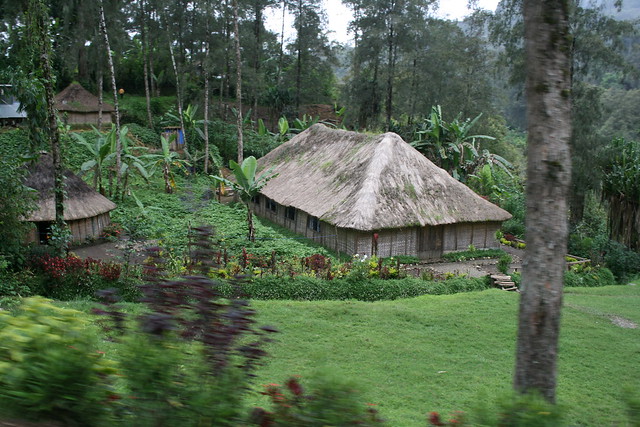 Discouraged but determined to continue their work for God's glory, the Grahams decided to build again. But this time, the entire home was dismantled and stolen, piece by piece.
What should they do? The Grahams knew that hardships often happened to those who were working to bring God's Word to people, but to have their home destroyed twice? Maybe God was trying to say something to them.
They stopped to pray and ask God a simple question: should they try again, or was God closing the door? Could this be God's way of leading them in a new direction?
As they prayed, a colleague had a vision of small fires burning across the landscape. Maybe God was saying there was going to be a revival among the people, and that fires were going to be lit in the hearts of those hungry for Him.
Mack and Doris decided to ask God to confirm that He wanted them to return by providing other confirmation before a certain date .If the people asked them to return by that date, they would. But if not, it was over. They would leave their village home in Kandawo and go wherever God led.
The day finally arrived. Afternoon passed, and then evening, but still no word. Mack and Doris began to think that God was showing them that He was shutting the door, and maybe they weren't supposed to return to their village home.

Then, six hours before midnight, a letter was red over a two-way radio: "Would you please come back?" it read.
Mack and Doris knew that God had answered their prayers and confirmed their call to the village. So they returned and built yet another house. Later they watched in shock as the third house burned to the ground.
But instead of losing hope, the Graham family built a fourth house. Believing that God had clearly spoken to them about continuing their work among the Kandawo people, they continued to trust the Lord by placing this new house in his hands.
They gave many more years translating and ministering to the Kandawo people. And more than two decades ago, Mark's Gospel-the first book to be translated-reached the final stages of the translation process and was checked by a consultant. At the beginning of 2013, the same consultant checked the final book of the New Testament-Revelation.
In 2014, just over twenty years after they first moved to the Kandawo village, Mack and Doris hope to typeset the entire New Testament and finally see the Bible in the hands of the Kandawo people.
*This story was taken from the 2014 The Finish Line brochure, which teaches people how to pray for Bible Translation projects that are about to be finished.
Soon they experienced fierce opposition. While away from the village for a season, thieves broke in and vandalized their home.
Discouraged but determined to continue their work for God's glory, the Grahams decided to build again. But this time, the entire home was dismantled and stolen, piece by piece.What should they do? The Grahams knew that hardships often happened to those who were working to bring God's Word to people, but to have their home destroyed twice? Maybe God was trying to say something to them.
They stopped to pray and ask God a simple question: should they try again, or was God closing the door? Could this be God's way of leading them in a new direction?
As they prayed, a colleague had a vision of small fires burning across the landscape. Maybe God was saying there was going to be a revival among the people, and that fires were going to be lit in the hearts of those hungry for Him.
Mack and Doris decided to ask God to confirm that He wanted them to return by providing other confirmation before a certain date .If the people asked them to return by that date, they would. But if not, it was over. They would leave their village home in Kandawo and go wherever God led.
The day finally arrived. Afternoon passed, and then evening, but still no word. Mack and Doris began to think that God was showing them that He was shutting the door, and maybe they weren't supposed to return to their village home.
Then, six hours before midnight, a letter was red over a two-way radio: "Would you please come back?" it read.
Mack and Doris knew that God had answered their prayers and confirmed their call to the village. So they returned and built yet another house. Later they watched in shock as the third house burned to the ground.
But instead of losing hope, the Graham family built a fourth house. Believing that God had clearly spoken to them about continuing their work among the Kandawo people, they continued to trust the Lord by placing this new house in his hands.
They gave many more years translating and ministering to the Kandawo people. And more than two decades ago, Mark's Gospel-the first book to be translated-reached the final stages of the translation process and was checked by a consultant. At the beginning of 2013, the same consultant checked the final book of the New Testament-Revelation.
In 2014, just over twenty years after they first moved to the Kandawo village, Mack and Doris hope to typeset the entire New Testament and finally see the Bible in the hands of the Kandawo people.
*This story was taken from the 2014 The Finish Line brochure, which teaches people how to pray for Bible Translation projects that are about to be finished.
Subscribe to:
Posts (Atom)