Showing posts with label Wycliffe. Show all posts

Tuesday, March 31, 2015

Sign Language Impact

Signing for Impact


Tens of thousands of deaf people are locked in a world of silence in PNG, having never been taught sign language and unable to communicate with others.

Foreting and Nathalie Juhonewe, who are both deaf themselves, have a burden for ministering to the deaf of PNG. They know that establishing an accurate dictionary is the first step. In fact, Nathalie calls it a fundamental leap. She asks, "How can anyone translate the Bible into PNG's sign language if there's no dictionary to rely on and just a few established signs for Christian concepts? And most of all, how can anyone reach the deaf if they haven't acquired any language since their parents never learned to sign with them as children?

There is an old dictionary from 1994 which a team of hearing people copied from Australian Sign Language with some created signs for PNG words, totaling about 2250 words/signs. However, it needs revision to be useful for the deaf community in PNG. The sign language used in this country has developed into an independent sign language with its own native grammar and syntax.

Now that the deaf children who have used the dictionary since 1994 are adults, they are reviewing the dictionary and updating it to include signs used in their language and deleting signs that they don't use. A team of deaf people from every corner of Papua New Guinea has gathered twice yearly since 2012 and developed almost 1300 new signs thus far. The goal is a sign language dictionary that will be an up-to-date foundation for everyone who needs or wants to know the national sign language used here in PNG.

There are an estimated 24,000-30,000 pre-lingual deaf people in PNG who were not taught sign language as children. Once every deaf child starts to learn it, the national sign language would become one of the largest indigenous languages of Papua New Guinea. That's not happening yet, but Foreting, Nathalie, and others are working toward that goal.

Nathalie explained, "We minister to the deaf in the hopes of seeing every deaf child start to sign, so that they have a language to connect with other people and to learn about our amazing and loving God."

Changing lives 

Thursday, March 26, 2015

Write it on the Board

Write it down

Remember when you had to go to the front of the class and write on the board? Here is a class in Back Translation Principles that is held in Ukarumpa, Papua New Guinea. As part of the translation process, translators take translated material and write it out in English to check it for accuracy. First it is translated word for word. Then it is rearranged to make sense in English because word order and sentence structure can be different from language to language. It's hard work and requires a good understanding of both languages. Pray for wisdom, as this training is very important to the accuracy of the translation. 


*This post was taken from the PNG Experience blog. 

Tuesday, March 3, 2015

Bright Moon Rising

By the light of the moon


There are many places in the world where the moon is the main source of light at night. No street lights or LED flashlights, just the moon and the starry sky. When a full moon comes up in areas like that, its brilliance is startling. In urban and suburban areas, we rarely see the brilliant light of the moon because so many other lights distract us. The Bible can become like that.

In areas where we have so may things that compete with the Bible, it can seem to lose its luster. Is it the Bible or are we distracted by competing things? In Papua New Guinea, when a New Testament is completed, celebrations are huge and people get excited. Pray for the Kandawo people who will be celebrating their New Testament dedication in April. Pray for lasting results as the Scriptures change lives and impact communities.


*This post was taken from the PNG Experience blog. 

Monday, February 16, 2015

Wycliffe Updates

The Lord is working slowly but surely in my life. Sometimes I wish it was a tad faster, but His timing is always perfect (as I keep telling myself). So, here are some awesome things God has done in the last few days with regards to my Wycliffe ministry:


  • Today I was accepted to the Canada Institute of Linguistics for their summer program. I need to take these classes before I can serve the Lord in the beautiful land of Papua New Guinea. 
  • I now have 26% of my monthly financial pledges and 69% of my one-time gifts. Praise the Lord for this great jump in my one-time expenses! Again, I need to have each kind of expense at 100% before I can go overseas with Wycliffe. Slowly but surely, my friends.
  • I have the opportunity to go to Houston this week to speak to my grandparents' friends and church about the awesome things God is doing through my life and Wycliffe. 

Thank you for journeying along with me in this exciting adventure! You are essential to getting God's word to those who don't have it yet. 


Wednesday, February 11, 2015

Learning the Value of Internships

*This post from the Wycliffe blog is about my sweet friend, Leah Doty, whom I met at training in November in Orlando, Florida. She will be serving the Lord in SE Asia as soon as she reaches 100% with her financial partnership.


Leah's family
Bible translation is in Leah's blood. It began with her grandparents, long-time translators in Southeast Asia. And it continued with her parents, faithful administrators and translators in Kenya, Thailand, the Philippines and the Solomon Islands.

 Then it came time for Leah to decide what to do. She studied at Houghton College, knowing that she wanted to work in Bible translation, but she was unsure of how or where.

Leah turned to internships with Wycliffe and SIL (one of Wycliffe's primary partners) to help her figure it out. Her first internship took her to Dallas, where she served the Language and Culture Archives department, helping former linguists archive their untapped resources.

"It was good to get perspective on what happens there," Leah recalls. "The resources we're producing need to be made accessible, (but I learned that) archives is not my life's calling."

Next Leah signed up for a internship that took her to Northeast Thailand, where she worked in Scripture engagement, facilitated workshops by assisting local Rit people in developing curriculum.

"(There) I got to contribute to the literacy of the Rit people, lending skills that were in demand," leah recounted. "It was great."
Leah's extended family 

But as the internship came to an end, Leah wasn't ready to finish her linguistics work. She was finally sure of what she wanted to do in Bible translation-linguistics in Southeast Asia, where her family has worked for generations.

"I'm excited to take and interest in peoples' language in order to communicate love and value to them-primarily, to see communities transformed by the work we do," she said.

Now, Leah is headed back to a country where she grew up, and the internship process was critical to finding her own place in missions.

"(The internships) kind-of exemplified two different sides of what Wycliffe and SIL do," Leah said. "There's a diversity of work that we do and it was good to see a couple different perspectives (of that."

Now, more than ever, Leah feels connected to a purpose bigger than herself- and, besides her family, she has her internships to thank for that.

Leah Doty 
"I want to see the message of the gospel transform society, change the world."

Monday, February 9, 2015

How Do I Get Down?

A long way down!

The rugged terrain in Papua New Guinea makes travel difficult. Can you imagine trying to get down from the top of this mountain? While they make for beautiful scenery and waterfalls, they also become barriers that make getting from one village to another almost impossible. One of the jobs desperately needed is language surveying. Surveyors travel to these rugged locations to determine more information about a language and to gauge the interest in language development projects. Pray for safety as these teams travel throughout PNG.


*This post was taken from the PNG Experience blog. 

Saturday, February 7, 2015

Yum! Bananas for Breakfast

Breakfast of Champions


Sliced bananas on cereal may sound familiar, but that is not the only way to eat bananas for breakfast. How about roasted over a fire? Now that's a great way to start the day. It isn't hard to imagine that people all over the world do things differently and enjoy the difference. What is hard, is recognizing that the way you usually do something is not always the best way. Language workers in Papua New Guinea have to evaluate their way of thinking and make sure that they are not missing an opportunity to embrace a new way of doing things. The cultural context in which they work may offer a better solution for that language. Pray for flexibility and adaptability as new ways of working in languages are discovered. 


*The above post was taken from the PNG Experience blog. 

Tuesday, February 3, 2015

Looking Beneath the Surface

Coral Reef


It can be really hard to know how big a project will be when a language group is surveyed for the first time. Language surveyors need lots of wisdom as they investigate the various nuances of a remote language group to see if they are good candidates for a Bible translation project in Papu New Guinea. These surveyors travel many kilometers, and many of them are done on foot. They have a limited amount of time to study the prospective group's interest and support for the project and then must decide if they will be a good candidate. Pray that they can make good decisions so that more projects can be started in 2015.


*This post was taken from the PNG Experience blog. 

Saturday, January 31, 2015

Still Waiting

A boy who needs God's Word


Papua New Guinea has over 830 languages and more than 7 million people. Almost 300 languages of the above 830 in PNG are still needing a Bible translation project to begin. This boy's language group representatives met translators who were in transit to their work site. They pleaded with the translators to come to their language group after they finished the translation they were working on. Sadly, that commitment could not be made. They did, however, give them information on how to create a team and where they could get the training they needed so that they could begin. Pray that more translation teams could be formed to meet the needs of all the languages.  

*This post was taken from the PNG Experience blog.

Tuesday, January 27, 2015

Using Your Gifts for God's Glory

"I want you in full-time ministry," God told him.

This calling  came out of the blue for Steve. After all, he was enjoying his life and work as a band and choir teacher near Spokane, Washington. He and his family had a great community of friends, and they even saw themselves staying in Spokane long-term. But it seemed God had other plans for them.


Teaching a Music Lesson
When recalling the day he heard God's voice, Steve admits he was hoping for more details from God. After all, he didn't feel qualified spiritually, and his particular gifts didn't seem to fit the mold of full-time ministry. Steve thought about possibly going to Bible college to further his education, but that wasn't something he really wanted to do-he'd already received an education and loved what he did. He was confused by God's call and didn't know what it meant for him and his family.

A year later, Steve happened to meet a Wycliffe recruiter who told him about the remaining need for Bible translation in almost 2,000 languages. But Steve still didn't see where he fit. "There's no way I could be a Bible translator!" Steve shared. And isn't that what he would have to do if he worked for Wycliffe Bible Translators? 

But then Steve learned something exciting-something that seemed to answer that haunting question of where his gifts fit in ministry. The recruiter told him that Wycliffe needs teachers, particularly for missionary kids. Even music teachers!

This news struck a chord with Steve. He had a set of gifts and qualifications that could be used right away, and in full-time ministry!

A Choir at Ukarumpa
So in 2006, Steve and his family moved to Papua New Guinea where he now teaches at Ukarumpa International School. And through teaching, Steve's making a difference in the lives of his students, their families and even those who are still waiting for the Bible in their own language.

"I'm helping God's Word reach new places, new hearts," Steve shared. "It's cool to hear parents say, 'We wouldn't be missionaries here if it wasn't for the school.' These parents are able to focus on translation, literacy, and other work because they know their children are being given a solid education."

And it's true. When people like Steve use the gifts God has given them for this glory, they're contributing to the work of Bible translation. Every role is important in this work-even teaching music to missionary kids. It's just a matter of faithfully answering God's call when your hear his voice.


*This post was taken from Wycliffe's blog. 

Thursday, January 22, 2015

Early Start

Morning in Papua New Guinea


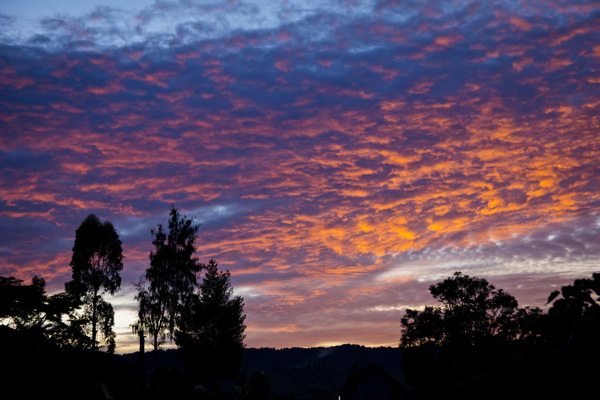
Just before the sun crests the hills near Ukarumpa Center, Papua New Guinea, the sky will often produce a dazzling array of colors. In the far corners of the sky, the blues and greys are just beginning to get a hint of red while close to the source, the sky is ablaze with oranges and yellows. It is as if they can't wait to be announced, but work has already begun in many places. 

Pilots and mechanics ready planes, teachers are putting the final touches on their lessons, the training center is serving breakfast and linguists and translators are working in the silence of their offices. Pray for the early morning work being started. Pray that the work will be done with full attention and great skill. 

*This post was taken from the PNG Experience blog. 

Friday, January 16, 2015

Words for the Heart


What speaks clearly to the heart? Certainly not a foreign language. Yet many language groups in Papua New Guinea only have access to the Scriptures through  Bible that is written in a language different than the one the learned at birth. But...that can be changed! Prayer is the greatest tool that we have to change things. Pray today that more resources and works would be found so that the Word of God would come to all language groups that are waiting for them. 

*This blog post was taken from the PNG Experience blog. 


*In regard to my Wycliffe ministry, I am now at 48% for my one-time gifts and 15% for my monthly gifts, and that much closer to the Bibleless people in Papua New Guinea! Praise the Lord for His faithfulness and provision!


Saturday, January 10, 2015

What's New


January is often a time for new beginnings. We sometimes make New Year resolutions that focus on things that we want to do this year that we didn't do last year... or the budget year may have ended and a new budget year started. Perhaps new programs and projects will be initiated on this date. However, in reality,  January 1 is just another day... with a day before that is now history and a day to come that brings bright hopes and prospects. In the world of language development and Bible translation, it may mean that another year of work has been completed or sadly, another year where a language group still hasn't tasted even the smallest amount of Scripture in their heart language. Why not pray today that the year 2015 would be the year that a record number of languages in Papua New Guinea would have a project started in their language.
New Words for a New Year


*This blog was taken from the PNG Experience blog. 


Saturday, January 3, 2015

A Look Back, a Step Forward

I hope everyone had a wonderful New Year's celebration! May this New Year be filled with God's glory and His people seeking his face.

Here is a poem written by an accountant serving in Papua New Guinea by keeping track of the resources used for Bible Translation:


The Coming of the Word

The ancient little village had not yet seen or heard
The baby born among them, the living, breathing Word.
The prophecy of Micah as known-as least by some-
In Bethlehem of Judah the Promised One would come.

This unknown little baby, so fragile and so small-
The long-awaited Savior, the Word of God to all.
He came to earth so humble and all but hid from sight,
But we who know and love him still celebrate that night.

Now in another village the far side of the earth
Another group is hearing the story of his birth.
A story more important than any they have heard-
The God who speaks their language has given them his Word.

They never understood it in language used before,
But now it speaks so clearly! "We love it!" "Tell us more!"
So with their full attention, the Word is read aloud,
And faith is mixed with hearing among the joyful crowd.

But in another village somewhere between those two,
They read a foreign Bible that's still not getting through.
They want to understand it but only can in part
Because they're still not hearing the language of their heart.

In city, town and village we're challenged with the call
To be a part of bringing the Word of Life to all.
Through prayers, gifts and service, we take the Living Word
To ev'ry heart and language...till all the world has heard.

Tuesday, December 30, 2014

Like Opening a Treasure Box

Struggling in the university, unsure of his future, Eddie decided to follow his father's advice and take a year off from his studies. That year turned out to be a pivotal time in Eddie's life. 
As he wandered around the village wondering how to spend his time, a visitor arrived. Victor was from the Bible Translation Association of PNG and was looking for people to assist with the Mekeo Old Testament translation. Eddie agreed to help. 
The Mekeo New Testament had been completed in 1999. Eddie joined a team of Mekeo people who share the common goal of completing the Old Testament translation in their language. Verse by verse, they search for the best way to convey the meaning of each passage to their people. Sometimes it takes several tries to find just the right word. 
The True Treasure
When translating scriptures about the Ark of the Covenant, Eddi used the kofu, which means "box" in his heart language. However, this word didn't quite communicate how special and significant the Ark of the Covenant was to the people of Israel. He knew of another word, maufa, which referred to a special box, or a treasure box. Wondering if this word might fit, Eddie asked people in his village what they thought. They all agreed this was the best way to communicate the significance and value of the Ark of the Covenant. 

Eddie, too, is happy with including the word maufa. To the Israelites, the Ark of the Covenant was a precious possession because it held the stone tablets with God's law written on them. As Eddie translates, he finds God's book to be a rich treasure containing nuggets of wisdom and truth waiting to be discovered. One gem Eddie has found is peace. He testified, "When I am translating God's book it gives me a deep peace that I never had before." 
Papua New Guinean Boys
With a twinkle in his eye, Eddie elaborated, "Being engaged in translation is like opening a treasure box. It's something worth doing. You won't get rich in this life, but you will have true treasure in heaven.
*This story has been taken from the Papua New Guinea (PNG) blog


Monday, December 22, 2014

Come, and You will See

The following story is by a woman I met at a Wycliffe training (Equip) in Orlando, Florida last month. She is a sweet woman of God, and I am so glad I got to meet her and her beautiful family. And her story rings true with so many of my own experiences.

Alison first went to Tanzania with Wycliffe in 2006, serving as a linguist and literacy advisor. In 2012 she married Solomon Ngallaba, a Tanzanian. The Ngallabas are currently on furlough in the United States.

"It was December 2003 when I received a letter from Wycliffe Bible Translators accepting me as a missionary. As I reflect back on my calling into the ministry of Bible translation, I realize the Scripture God used to call me is just as relevant now as it was then.

Tanzania, Africa 
My journey to missions began in 2002 when I was working at Johnson University. I developed a thirst for learning more about the Bible. Even though I had a Bible degree from Johnson, I was excited about the Word in a new way and was thirsty for more. So I signed up to take Greek on my lunch break. One day a Bible translator spoke to our Greek class advocating for Bibleless people. I was shocked! I thought everyone had a Bible. (I grew up here in the 'Bible Belt,' after all.)

I kept thinking about the Bibleless people. I couldn't get them out of my mind. The Word meant so much to me; what would it be like to live without the Bible? But I didn't think I could possibly go.

This same semester, I attended Bible Study Fellowship on Monday nights. We were studying the Gospel of John. One verse captured my heart and convicted me, leading me into missions: in the first chapter of the Gospel of John, two of John's disciples saw Jesus pass by. They followed Him. Jesus knew He was being followed. He turned around and asked them, "What do you want?" They wanted to know where He was staying. Jesus' reply is what got me: "Come, and you will see."

Tanzania, Africa
Over the next nine or ten months, I thought of those Bibleless people. And I was filled with a long list of doubts and fears. "God, I don't speak any language except English." He replied, "Come, and you will see." "God, I've never lived anywhere but Tennessee. Can I really move overseas?" God replied, "Come, and you will see." "God, what if I get sick?" "Come, and you will see." "What if I miss my family?" "Come, and you will see." "What if something bad happens?" "Come, and you will see."

This continued until I finally said, "Yes, Lord. I will come!" I've never regretted that decision even for one day.

Now here I am, a decade later. I still find myself filled with doubts and fears. "God, what will it be like to live in teh United States for a year? I haven't lived here for that long since 2005." "Come, and you will see." "God, what will it be like being a mom and raising our daughter overseas?" "Come, and you will see." "How will we live in America on an African budget?" "Come, and you will see."

A silly photo of all of us from Equip
Just as it took me some months to say, "Yes, Lord, I'll come!" I find myself in that process again. I am slowly uncurling my anxiously clenched hands and letting God fill them. He is faithful and His words are true."

Amen. May we all come and see the goodness of God, the goodness that began before time, landed in a manger, and rose on a cross three days later. May we all come and glorify the Lord Jesus Christ.


Wednesday, December 17, 2014

Day 12: Greenland

A village in Greenland
The last stop on our 12-day adventure is Greenland. And, contrary to its name, it is actually quite cold. So get out your anorak (a traditional white coat lined with fur) for this freezing journey. There are two main languages spoken here-Inuit/Greenlandic and Danish. So there are two ways to say "Merry Christmas". In Greenlandic, it's Juullimi Ukiortaassamilu Pilluarit (say that ten times fast!), and in Danish it is Glædelig Jul.

Did you know that Christmas trees have to be imported because trees do not grow as far north as Greenland? The trees are often brought from Denmark, and then they're decorated with candles, bright ornaments, and sometimes even small versions of sealskin breeches known as kamiks on the night of December 23rd. If people don't buy an imported tree, they might use a traditional driftwood tree that's decorated with heather. Villages also put up a large Christmas tree on a nearby hill so that everyone can see it.

Mattak
There are some interesting foods eaten during Christmas time. Mattak is whale skin with a strip of blubber inside (yum). It's supposed to taste like fresh coconut, but it's often too hard to chew, so people just swallow it. Another food is kiviak, the raw flesh of little aucks (a kind of arctic bird) that have been buried whole in sealskin for several months until they are really decomposed; this is a delicacy in Greenland.

People also eat suaasat (a soup/stew), barbecued caribou, fish (either raw like sushi or cooked), and a popular dessert made of berries and apples with a crisp topping. They also eat many Danish pastries. It's a tradition that on Christmas night men take care of the women, serving the food and coffee.

Like in Finland, some people say that Santa Claus lives in Greenland as well. Either that or it's where he goes for his summer holidays at least. People say that he as a home in the north of the country in Spraglebugten, near the town of Uummannaq. And because so many people believe Santa lives there, children actually send letters to him. The letters are addressed to the "North Pole," but they end up in the post office in Greenland's capital, Nuuk. Around 50,000 letters are sent to Santa every year. Another neat thing is that people there think Santa's sleigh isn't pulled by reindeers but by dogs.

Eskimo Children in Greenland
Fun Facts: 
*People often put lit-up stars in their windows to help bring some light, since the sun never rises in Greenland in the winter.

*Traditional gifts in Greenland are model sledges, a pair of polished walrus tusks or sealskin mittens. Everyone in the village receives a gift, and kids go from house to house singing songs for their neighbors.

Play “What’s that you’re passing?”
A popular Christmas game is passing an object from one hand to another under a long table, hidden beneath the table cloth. Traditionally the object is something that's supposed to feel gross (like a frozen egg, wrapped in strips of wet fox fur) and that's round, clammy, and rough. Next time your are at dinner, try playing this game. Find something that might feel funny in your hand and pass it around from one person to the next. After everyone's touched it, try guessing what it is.

*All of the above information has been taken from the Wycliffe-created characters, Kate and Mack. To sign up for more children activities or learn about the book they feature in (Around the World with Kate and Mack), click on this link: http://www2.wycliffe.org/a-z


Tuesday, December 16, 2014

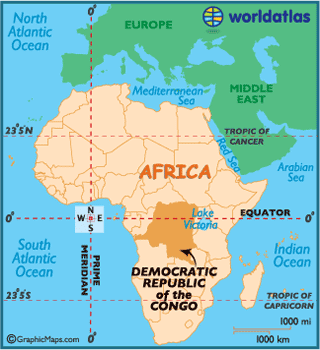
Day 11: Democratic Republic of the Congo

 We're on our second to last stop-the Democratic Republic of the Congo (DRC). Here "Merry Christmas" is Mbotama Malamu (this is in Lingala, the language spoken in the DRC and some other African countries).

Christmas is a big religious festival in DRC. On Christmas Eve, churches have large musical events (some with even five or six choirs that sing), and they perform a play ofthe nativity. These plays last a long time-they start at the beginning of the last night of creation and the Garden of Eden, and last all the way until King Herod has sent out the order that all baby boys should be killed. People like acting in this play, and they often try to make it fun and exciting.

Then, around midnight, Jesus is finally born. After that the shepherds visit, the wise men arrive, and Herod's order is sent out. The play usually ends around 1 a.m, but after that they often keep singing until dawn, which makes for a long night. Another service for Christmas Day begins at 9 a.m. with even more singing, but then the rest of the day is spent quietly, and lots of people enjoy a long nap after such a fun and long Christmas Eve night.

The Congo River in DRC
Fun Facts: 
* Since Christmas is a religious festival, most people don't give each other presents. The day is meant to remember the story of Jesus' birth and all that happened before then.

* There aren't any fancy foods eaten on Christmas Day, but people usually try to have a better meal than they usually do if they can afford it. That means they might add some chicken or pork to dinner, which is a special treat.

*All of the above information has been taken from the Wycliffe-created characters, Kate and Mack. To sign up for more children activities or to learn about the book these characters feature in (Around the World with Kate and Mack), click on this link: http://www2.wycliffe.org/a-z


Monday, December 15, 2014

Day 10: Philippines

From the cold of Russia to the warm tropics, we're visiting the Philippines to learn how they celebrate Christmas. Did you know that the Philippines celebrate Christmas over four months? They start celebrating as soon as the "ber" months start, in September. They keep celebrating until the middle of January, so the Philippines' celebration of Christmas is the longest in the world. In Tagalog (the language spoken most often in the Philippines) "Merry Christmas" is Maligayang Pasko.

Palawan Island, Philippines 
Christmas is a big holiday in the Philippines because the country is mostly Christian-in fact, it's the only Asian country with so many Jesus followers (around 80% or more are Catholic). The ways people celebrate are a mixture between American traditions and native Filipino traditions, so many people have a Christmas tree, sing Christmas carols, write Christmas cards and have Santa Claus deliver presents.


A parol
They also often attend nine masses called simbang gabi (or "night worship") beginning December 16th until Christmas Eve. These masses are often early in the morning and then people have breakfast together afterwards. But they also have their own traditions like the parol, or a lighted star lantern. It's often made from bamboo strips and colored paper or cellophane. The parol represents the star that guided the wise men to Jesus, and it's one of the most popular Christmas decorations.

Christmas Eve is very important, and many people stay awake all night. Christians go to church to hear the last simbang gabi (Christmas Eve mass). After the service they eat a midnight feast called Noche Buena. This sounds quite a bit like Spanish, and there are actually quite a few Spanish words used in Tagalog. This is because for many years Spain ruled the Philippines, so parts of the Spanish language are still used.

Bibingka

The Noche Buena is a big, open house celebration with family, friends, and neighbors dropping to wish everyone Maligayang Pasko. They eat foods like lechon (roasted pig), ham, fruit salad, steamed rice and sweets. They also drink salabat, a ginger tea, and eat bibingka, a traditional treat that is a thick yellow rice cake.


Fun Facts: 
*In the Philippines, people replace the words, "Happy Birthday" with Maligayang Pasko and sing it to the tune of the traditional happy birthday song.

*On Christmas Eve, people act out Joseph and Mary's search for a place to stay. It's called panunuluyan, and it's similar to the Mexican posadas.

Make your own parol!
Parols are beautiful star decorations that light up, and they're seen in many Filipino houses or stores as part of their Christmas decorations. They're usually big and bright, but here are steps for a smaller, simpler one.

Supplies:
*Popsicle sticks or cardboard
*Colored tissue paper
*Glue
*Scissors

Instructions:
1. Glue your popsicle sticks together in the shape of a typical star.
2. Now add your tissue paper. You can either make it all the same color, or you can make every part of the star a different color. Glue the tissue paper in place however you wish it to look. Now you can hang it on your tree, above your fireplace, or by a window.


All of the above information has been taken from the Wycliffe-created characters, Kate and Mack. To sign up for more children's activities or find out about the book these characters feature in (Around the World with Kate and Mack), click on this link: http://www2.wycliffe.org/a-z


Saturday, December 13, 2014

Day 9: Russia

This is how I'd look in Russia in the winter too!
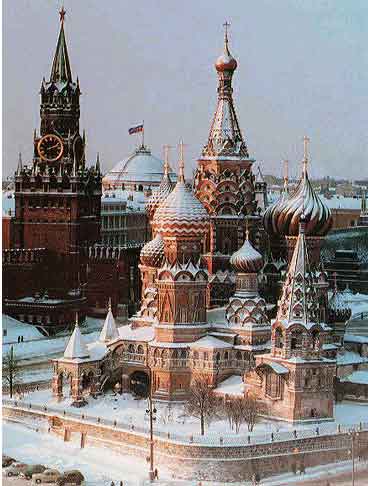
Well, we are here back in cold weather. We've already visited this part of the world before, when we came to Serbia, but now it's time to learn how Russia celebrates Christmas. Like Serbia, Christmas is celebrated on January 7th. And also like Serbia, this is because Russians follow the Julian, not the Gregorian, calendar. Russians also celebrate Advent (which begins Nov. 28th and ends on Jan. 6th, the day before Christmas).

On Christmas Eve some people fast until they see the first star appear in the sky. But when they do eat, it's foods like sochivo or kutia, a porridge that's made from wheat or rice and served with honey, poppy seeds, fruit (usu. berries and raisins), chopped walnuts, and sometimes fruit jellies.   Kutia is sometimes eaten from one bowl that everyone shares, which represents unity among them. In the past, some families would throw a sochivo up on the ceiling, and if it stuck, they thought they'd have good luck and a good harvest.

Sauerkraut is a main dish on Christmas Eve, and it's served with cranberries, cumin, shredded carrot and onion rings. After that, people might eat vegetable pies or porridge dishes. For dessert there's fruit pies, gingerbread and pryaniki (Russian spice cookies), fresh and dried fruit, and more nuts. To finish the meal, people drink vzvar (which means "boil-up"), and it's a sweet drink made from dried fruit and honey boiled in water. Vzvar is traditionally drunk at the birth of a child, so at Christmas time it symbolizes the birth of Jesus.

After drinking the vzvar, families say prayers and often go to a midnight church service. Christmas is important in Russia, but sometimes the New Year celebrations are even more important. New Year's is when "Father Frost" brings presents. In Russia he's called Ded Moroz, and his granddaughter, the "Snow Maiden" (or snegurochka in Russian), always comes with him. On New Year's Eve kids hold hands, make a circle around the Christmas tree, and call for Ded Moroz and Snegurochka. When they come, the star and other lights on the Christmas tree light up.

Fun Facts: 
*Tradition calls the Christmas Eve meal "Holy Supper," and 12 dishes are served (one to honor each of the 12 apostles of Jesus).
*In 1992, Christmas became a national holiday in Russia. People get 10 days off-from December 31st to January 10th-to celebrate both Christmas and the New Year.

Make your Own Pryaniki! 
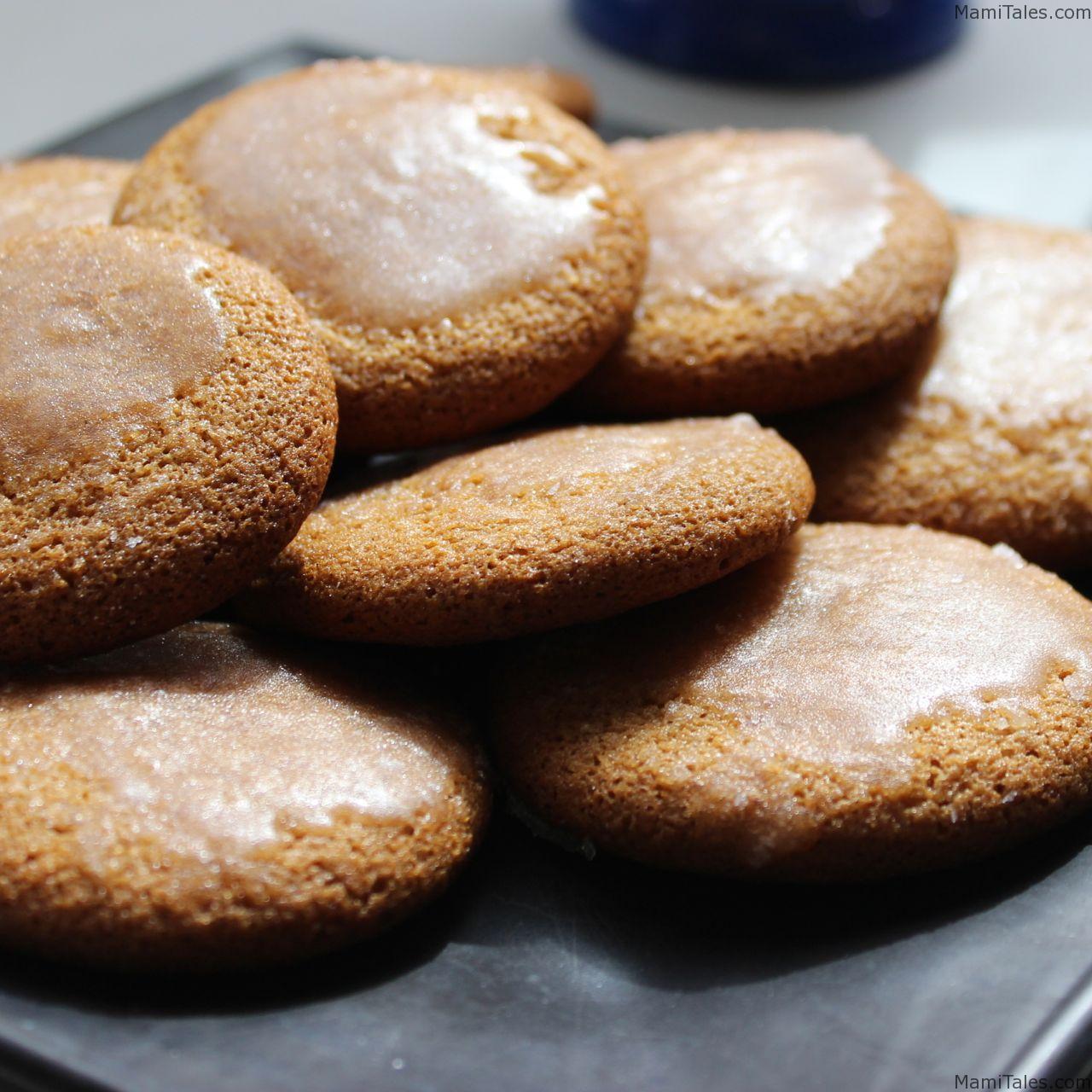
Pryaniki are Russian spice cookies served with tea at Christmas time. They're often simple round cookies covered with a flat icing, but you can use fun Christmas cookie cutters if you would like. These cookies have been made since the 9th century, and if they've lasted that long, they must be delicious.

Russian Spice Cookies
Ingredients: 
* 3 cups all-purpose flour
* 1 teaspoon baking soda
* 1/2 teaspoon cinnamon
* 1/2 teaspoon cardamom
* 1/2 teaspoon nutmeg
* 1/2 teaspoon allspice
* Dash of salt
* 2 large egg yolks
* 1 teaspoon vanilla
* 1 cup granulated sugar
* 1 cup honey
* 1/2 cup confectioners' sugar

Directions: 
1. In a medium bowl, sift together the flour, baking soda, cinnamon, cardamom, nutmeg, allspice and salt.
2. In a separate big bowl, beat the egg yolks and sugar with an electric mixer until they are pale yellow and thick looking.
3. In a small saucepan, heat the honey over low heat until it liquefies. Let it cool slightly so the heat doesn't scramble the eggs, and then stir the melted honey and vanilla into the beaten egg mixture.
4. Now mix in the dry ingredients to form a stiff dough. Cover with plastic wrap and let it refrigerate for one hour.
5. Heat the oven to 350 degrees.
6. Place parchment paper on your cookie sheet so that you have a clean surface.
7. Scoop out the cookies, and place them on the sheet. Make sure you leave some room between cookies so they don't merge.
8. Lightly brush the tops of the cookies with honey.
9. Bake for 10-20 minutes, or until they're lightly golden brown.
10. In a bowl, add the confectioners' sugar and enough water (about 1 to 2 tablespoons) and whisk it together to form a thin icing. When the cookies are cool, spread the icing on the top of them.


*All of the above information has been taken from the Wycliffe-created characters, Kate and Mack. If you would like to sign up for more children's activities, or learn about the book they feature in (Around the World with Kate and Mack), click on this link: http://www2.wycliffe.org/a-z